
BBA vs BCom Which Is Better ?
Choosing the right degree after 12th is one of the most important decisions that shapes your career. Among the most popular options for commerce and non-commerce students alike are BBA (Bachelor of Business Administration) and BCom (Bachelor of Commerce). Both degrees offer excellent career opportunities, but they differ significantly in terms of curriculum, skill development, job roles, and long-term growth.
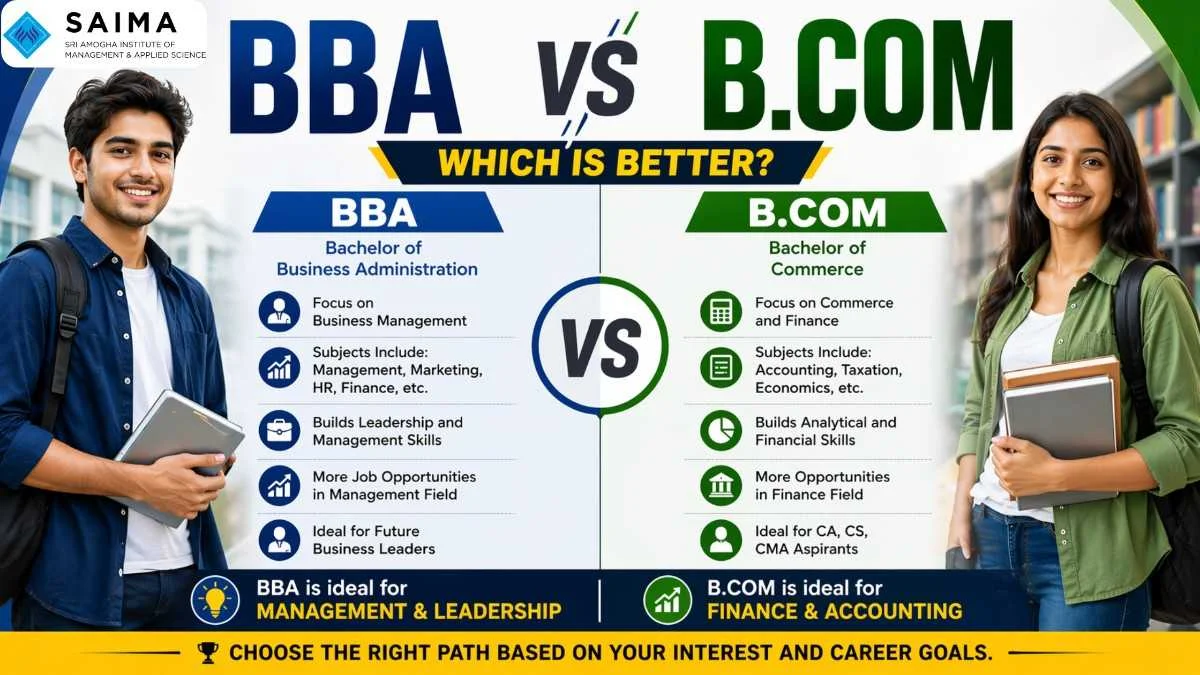
In 2026, the job market is evolving rapidly with the rise of digital transformation, startups, global business expansion, and financial innovation. Employers are no longer focusing only on degrees they are looking for practical skills, adaptability, and industry exposure. This makes the choice between BBA and BCom even more critical.
This detailed guide will help you understand the complete difference between BBA and BCom so you can make a smart, future-ready decision.
BBA vs BCom Which Is Better ? Decision Matters in 2026
The modern job market is skill-driven. Companies prefer candidates who can solve real-world problems, communicate effectively, and adapt quickly to changing business environments.
Choosing the right course impacts:
- Your career direction from the beginning
- The type of skills you develop
- Your employability after graduation
- Salary potential and career growth
- Higher education opportunities
Students who align their course with their interests and industry demand tend to achieve faster career success and better financial outcomes.
What is a BBA Degree?
BBA (Bachelor of Business Administration) is a 3-year undergraduate program focused on business management and leadership skills. It is designed for students who want to build careers in corporate sectors, startups, or entrepreneurship.
Key Features of BBA:
- Focus on management and business operations
- Covers marketing, HR, finance, and strategy
- Practical learning through case studies and projects
- Industry exposure through internships
- Develops leadership and communication skills
Who Should Choose BBA?
- Students interested in business and management
- Those who want to start their own business
- Students aiming for corporate careers
- Individuals with leadership and communication skills
What is a BCom Degree?
BCom (Bachelor of Commerce) is also a 3-year undergraduate program but focuses on finance, accounting, taxation, and economics. It is ideal for students who want to build careers in financial sectors or pursue professional courses.
Key Features of BCom:
- Strong foundation in accounting and finance
- Covers taxation, auditing, and business law
- More theory-based learning
- Suitable for professional certifications like CA, CMA
- Focuses on analytical and numerical skills
Who Should Choose BCom?
- Students interested in finance and accounting
- Those aiming for careers in banking or taxation
- Students planning to pursue CA, CMA, or CFA
- Individuals with strong analytical abilities
BBA vs BCom: Key Differences
Understanding the core differences helps in making the right choice

| Feature | BBA | BCom |
| Course Focus | Business Management | Commerce & Finance |
| Learning Style | Practical | Theoretical |
| Skills Developed | Leadership, Communication | Analytical, Accounting |
| Career Path | Corporate, Startups | Finance, Banking |
| Industry Exposure | High | Moderate |
Major Differences Explained:
- BBA focuses on management and leadership skills
- BCom focuses on finance and accounting knowledge
- BBA includes practical training and real-world exposure
- BCom builds strong conceptual understanding
BBA vs BCom: Syllabus Comparison
The syllabus clearly shows how both courses differ.
BBA Subjects:
- Principles of Management
- Marketing Management
- Human Resource Management
- Business Communication
- Financial Management
- Entrepreneurship Development
BCom Subjects:
- Financial Accounting
- Corporate Accounting
- Business Law
- Economics
- Taxation
- Cost Accounting
Key Insight:
BBA is more practical and industry-oriented, while BCom is more theoretical and concept-driven.
BBA vs BCom: Career Opportunities
Career Opportunities After BBA:
- Marketing Executive
- Business Development Executive
- HR Executive
- Sales Manager
- Operations Manager
- Entrepreneur
Career Opportunities After BCom:
- Accountant
- Financial Analyst
- Tax Consultant
- Auditor
- Banking Professional
- Investment Analyst
Salary Comparison: BBA vs BCom
Salary depends on skills, experience, and specialization.
Level | BBA Salary | BCom Salary |
Entry Level | ₹2.5–5 LPA | ₹2–4 LPA |
Mid Level | ₹5–10 LPA | ₹4–8 LPA |
Senior Level | ₹10–20 LPA | ₹8–18 LPA |
Key Insight:
- BBA offers faster entry into corporate roles
- BCom can lead to higher salaries with professional qualifications like CA or CFA
Which Course is Better for Jobs in 2026?
In 2026, industries are focusing on practical skills and digital knowledge.
BBA Advantage:
- Strong demand in marketing and management roles
- High relevance in startups and corporate sector
- Better exposure to real-world business
BCom Advantage:
- High demand in finance and accounting sectors
- Essential for professional courses
- Strong foundation for specialized careers
Final Verdict:
- Choose BBA for faster job readiness
- Choose BCom for long-term specialization in finance
BBA vs BCom for Non-Commerce Students
Many students from science and arts backgrounds face confusion.
Important Points:
- BBA is beginner-friendly and easy to understand
- BCom includes accounting from the start
- Non-commerce students may find BCom challenging initially
- BBA is more flexible for all backgrounds
Skills You Will Gain
Skills from BBA:
- Leadership and teamwork
- Communication skills
- Decision-making ability
- Business strategy understanding
Skills from BCom:
- Accounting and bookkeeping
- Financial analysis
- Tax planning
- Analytical thinking
Which Course Builds Job-Ready Skills Faster?
BBA is generally more job-oriented.
Why BBA is Job-Ready:
- Practical learning methods
- Case studies and presentations
- Internship opportunities
- Industry exposure
BCom Approach:
- Strong theoretical base
- Requires additional certifications
Role of Internships and Certifications
In today’s competitive market, internships and certifications are essential.
For BBA Students:
- Marketing internships
- HR internships
- Sales roles
For BCom Students:
- CA (Chartered Accountant)
- CMA (Cost Management Accountant)
- CFA (Financial Analyst)
Common Certifications:
- Digital Marketing
- Advanced Excel
- Data Analytics
Higher Studies After BBA and BCom
After BBA:
- MBA (Master of Business Administration)
- PGDM
- Specialized management courses
After BCom:
- MCom
- CA, CMA, CS
- MBA (Finance)
Best Course Based on Your Career Goals
Choose BBA If:
- You want a corporate career
- You are interested in marketing or HR
- You want to start a business
- You prefer practical learning
Choose BCom If:
- You are interested in finance and accounting
- You want to become a CA or CFA
- You prefer theory-based learning
- You want a career in banking or taxation
Why SAIMA Degree College Stands Out for BBA
SIMA Degree College is gaining attention among students for its student-focused and practical approach to education.
Key strengths include:
- Industry-oriented curriculum designed for real-time applications
- Emphasis on internships and practical exposure
- Supportive learning environment with personalized guidance
- Focus on communication and career readiness
- Growing reputation as an emerging BBA college in Hyderabad
Conclusion: BBA vs BCom – Final Decision
Both BBA and BCom are valuable degrees, but the right choice depends on your interests, strengths, and career goals.
- Choose BBA if you want a career in management, marketing, or business
- Choose BCom if you are interested in finance, accounting, or commerce
In 2026, success is not just about the degree—it is about skills, internships, and continuous learning. The earlier you align your education with your career goals, the faster you will achieve success.


